Pharma Manufacturing Trends 2027: The Future Is Smart, Connected and Quality-Driven
The future of pharmaceutical manufacturing is not just about producing more medicines. It is about producing them smarter.
Imagine a pharmaceutical facility where machines communicate, production data is monitored digitally, potential equipment failures are identified early, and quality teams can access reliable manufacturing records without searching through stacks of paperwork.
This is the direction in which modern pharmaceutical production is moving.
As the pharmaceutical industry prepares for 2027, technology, regulatory expectations, cost pressures, and supply chain challenges are reshaping manufacturing strategies. Traditional production methods remain important, but digital tools are creating new opportunities to improve efficiency, traceability, and process control.
For Indian pharmaceutical businesses, understanding the latest pharma manufacturing trends 2027 can help them make informed decisions about technology, quality systems, and long-term growth.
Pharma Manufacturing Trends 2027: What’s Next for the Industry?
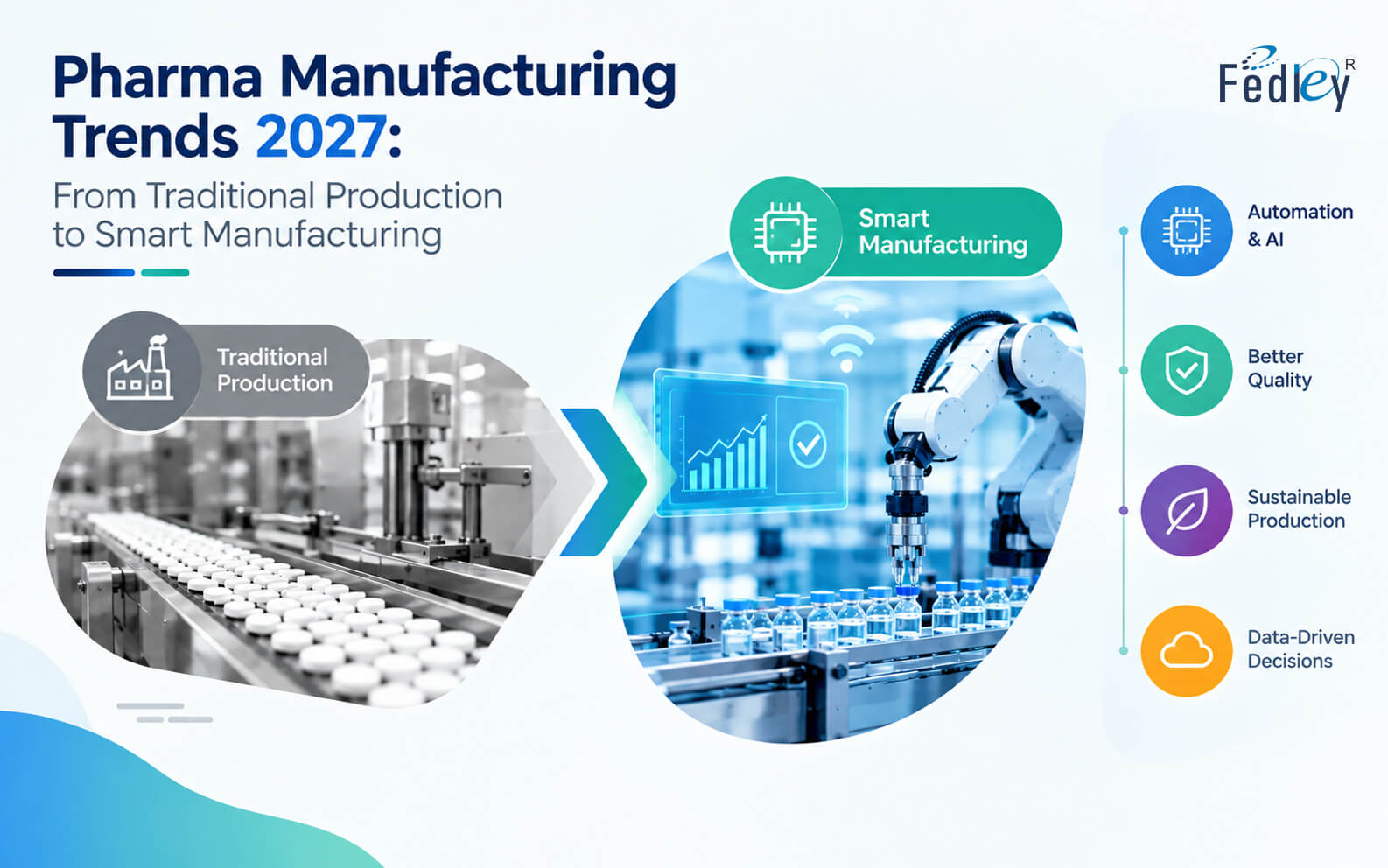
The future of pharma manufacturing is smarter, faster, and more connected. In 2027, key trends such as AI-powered production, automation, Pharma 4.0, real-time quality monitoring, and predictive maintenance are transforming how medicines are manufactured. These innovations help pharmaceutical companies improve efficiency, strengthen quality control, reduce downtime, and build more reliable supply chains while maintaining GMP compliance and patient safety.
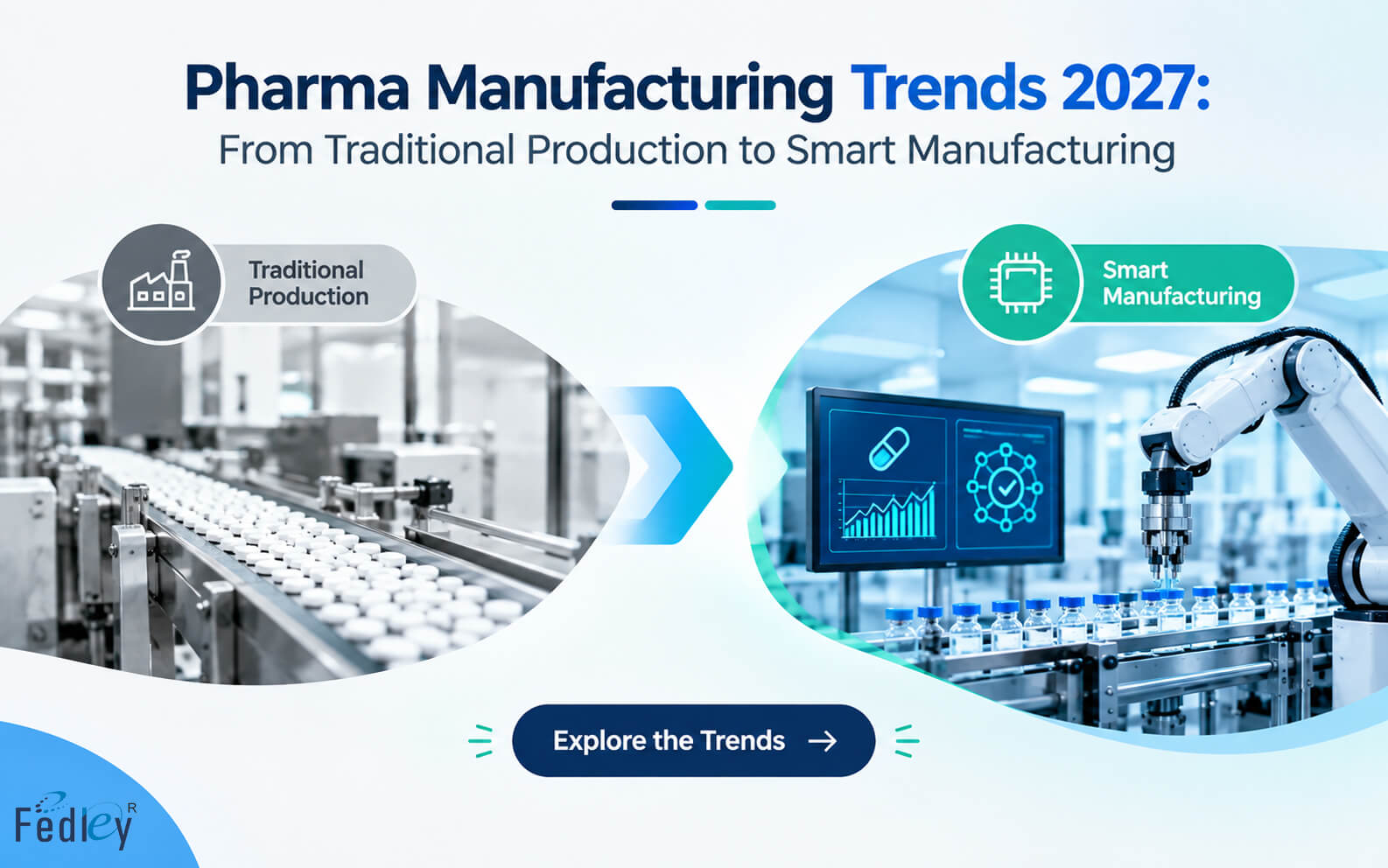
The Big Shift: From Traditional Production to Smart Manufacturing
Traditional pharmaceutical manufacturing relies on established processes, trained personnel, quality checks, and documented procedures. These fundamentals remain essential.
The difference is that modern facilities can supplement these practices with connected systems, automated monitoring, and data-driven decision-making.
Traditional approach | Smart manufacturing approach |
Manual data collection in selected processes | Digital data capture where appropriate |
Periodic equipment checks | Continuous monitoring for selected parameters |
Reactive maintenance | Data-supported predictive maintenance |
Separate information systems | Integrated systems where practical |
Paper-heavy workflows | Electronic records with appropriate controls |
What this means: Smart manufacturing does not eliminate the need for people or quality procedures. It gives trained teams additional tools to monitor processes, investigate problems, and make better-informed decisions.
5 Pharma Manufacturing Trends to Watch in 2027
01. AI Moves from Experimentation to Practical Applications
AI in pharmaceutical manufacturing is gaining attention because it can help analyse large volumes of production and operational data.
Depending on the application, AI tools may support equipment monitoring, demand forecasting, production planning, and the identification of unusual data patterns.
Where it can help:
- Identifying recurring equipment-performance issues.
- Supporting production scheduling and inventory planning.
- Analysing historical quality trends.
- Helping maintenance teams prioritise inspections.
AI should support, not replace, qualified decision-makers. Systems must be evaluated, validated where applicable, and monitored according to their intended use.
02. Automation Improves Production Consistency
Automation can reduce repetitive manual tasks and support more consistent execution of selected manufacturing activities.
From material handling to packaging and inspection, suitable automated systems can help improve productivity and reduce certain types of human error.
The opportunity: Manufacturers can assess which tasks are repetitive, time-consuming, or vulnerable to avoidable mistakes before deciding where automation offers real value.
03. Connected Sensors Enable Better Process Visibility
The Internet of Things (IoT) allows suitable sensors and equipment to collect and communicate operational data.
In pharmaceutical facilities, this may include temperature, humidity, pressure, equipment status, and other process-specific parameters.
When properly configured, connected monitoring systems can help personnel identify abnormal conditions and respond through approved procedures.
The key benefit: Better visibility into the conditions that matter to product quality and operational reliability.
04. Pharma 4.0 Connects Data, People and Processes
Pharma 4.0 applies digital manufacturing principles to pharmaceutical operations, linking equipment, production records, quality systems, and decision-making.
Tools such as Manufacturing Execution Systems (MES), electronic batch records, and integrated quality-management systems can improve access to manufacturing information.
However, digitalisation only works when records are reliable, and systems are properly controlled. Data integrity, cybersecurity, access permissions, and applicable validation requirements remain essential.
05. Predictive Maintenance and Sustainable Production Gain Attention
Unexpected equipment breakdowns can delay production and disrupt schedules. Predictive maintenance uses suitable equipment data and performance patterns to help anticipate maintenance needs.
At the same time, manufacturers are examining energy consumption, water use, material waste, and equipment efficiency.
A practical starting point: Track downtime, maintenance costs, energy use, and avoidable waste before investing in new technologies. Baseline measurements help determine whether a change is actually delivering value.
Smart Manufacturing Must Start with Quality
Technology can improve pharmaceutical operations, but product quality remains the priority.
GMP-compliant pharma manufacturing requires suitable facilities, trained personnel, qualified equipment, controlled procedures, reliable documentation, and effective quality oversight.
Digital tools should strengthen these systems, not become a shortcut around them.
Four quality priorities for modern manufacturers
- Process control: Monitor critical parameters using suitable, reliable methods.
- Data integrity: Maintain complete, accurate, traceable, and appropriately protected records.
- Validation and qualification: Demonstrate that applicable systems and processes perform as intended.
- Continuous improvement: Investigate deviations, implement corrective actions, and review performance trends.
For manufacturers in India, the applicable regulatory requirements will depend on the product, facility, and intended market. Technology adoption should be planned around those requirements.
Manufacturing Is Different for Every Dosage Form
There is no single smart-manufacturing solution for every medicine. Each dosage form has distinct process requirements and quality risks.
Manufacturing category | Areas requiring attention |
Blending, granulation where applicable, compression or encapsulation, and in-process controls | |
Water quality, mixing, ingredient control, filling, and applicable microbial controls | |
Sterility assurance, environmental controls, validated processes, and container-closure integrity where applicable | |
Packaging and labelling | Coding accuracy, line clearance, reconciliation, and traceability |
The pharmaceutical manufacturing process should determine which technologies are appropriate. For example, sterile injectable production requires specialised controls that differ significantly from those used for non-sterile oral medicines.
How Indian Pharma Businesses Can Prepare for 2027
Adopting smart manufacturing does not necessarily mean rebuilding an entire facility. A phased approach can help businesses prioritise investments and manage implementation risks.
The 5-step readiness plan
Step 1 — Assess your current operations
Identify production bottlenecks, recurring deviations, equipment downtime, documentation delays, and supply chain challenges.
Step 2 — Choose one measurable problem
Focus on a specific objective, such as reducing equipment downtime or improving batch-record review timelines.
Step 3 — Run a controlled pilot
Evaluate a suitable digital or automated solution in a limited scope before expanding it.
Step 4 — Train and validate
Provide appropriate staff training and complete the qualification, validation, data-integrity, and quality reviews relevant to the solution.
Step 5 — Measure the outcome
Compare results against the original baseline using indicators such as downtime, documentation errors, material waste, and process performance.
The most successful projects are not necessarily the most technologically advanced. They are the ones that solve clearly defined problems while maintaining quality and compliance.
Where Contract Manufacturing Fits In
Pharmaceutical contract manufacturing allows a company to engage an external manufacturer to produce medicines under an agreed arrangement.
For businesses that do not operate their own production facilities, this model may provide access to suitable manufacturing capabilities. However, partner selection should be based on quality systems, technical suitability, regulatory status, documentation, supply reliability, and clearly defined responsibilities.
Before proceeding, businesses should confirm:
- Product and dosage-form capabilities.
- Applicable licences and regulatory requirements.
- Quality agreements and change-control procedures.
- Responsibilities for complaints, deviations, and recalls.
- Production capacity and supply commitments.
Third-Party Manufacturing and smart manufacturing are different concepts: one describes a business arrangement, while the other describes a technology-enabled approach to production.
Similarly, PCD Pharma Franchise opportunities involve a commercial distribution or marketing arrangement, not a manufacturing technology in itself.
Businesses exploring PCD Franchise Services should confirm product availability, territorial terms, promotional responsibilities, and other commercial conditions directly with the relevant provider. Ethical Promotion should remain accurate, responsible, and compliant with applicable requirements.
Quick Takeaway: What Will Matter Most in 2027?
Priority | Why it matters |
AI and analytics | Support data analysis and operational decisions |
Automation | Improve repeatability in suitable tasks |
Digital records | Strengthen documentation and traceability |
GMP and data integrity | Protect product quality and reliable records |
Supply chain visibility | Support planning and inventory decisions |
Sustainability | Help identify resource and waste-reduction opportunities |
The winning strategy is balanced: use technology where it delivers measurable benefits, maintain strong quality systems, and prepare employees to work confidently with new processes.
Conclusion: Build Smarter, Without Compromising Quality
The future of pharmaceutical production will be shaped by the ability to combine technology with strong manufacturing fundamentals. Pharma manufacturing trends 2027 highlight opportunities in AI, automation, digital systems, predictive maintenance, and more connected supply chains.
For Indian pharmaceutical businesses, the practical approach is to assess existing processes, prioritise meaningful improvements, and adopt technology in a controlled and measurable way.
Whether a company operates its own facility or explores Third-Party Manufacturing and PCD Pharma Franchise opportunities, product quality, regulatory compliance, reliable supply, and responsible business practices remain essential.
About Fedley Healthcare
Fedley Healthcare
- Location: Plot No. 201, Ground Floor, HSIIDC, Alipur, Phase 1, Industrial Area, Barwala (PKL), Haryana – 134118
- Email: fedleycare@gmail.com
- Phone: +91-9855986633 | +91-9317692852 | +91-9888656719
Frequently Asked Questions
Q1. What are the major pharma manufacturing trends in 2027?
Key pharma manufacturing trends in 2027 include AI-assisted analytics, automation, connected sensors, Pharma 4.0, predictive maintenance, digital documentation, and improved supply chain visibility.
Q2. What is smart pharmaceutical manufacturing?
Smart pharmaceutical manufacturing combines digital systems, connected equipment, automation, and data analytics to improve process visibility, traceability, and operational decision-making.
Q3. How is AI used in pharmaceutical manufacturing?
AI in pharmaceutical manufacturing may support equipment monitoring, maintenance forecasting, production planning, demand forecasting, and quality-trend analysis. Its use requires appropriate oversight and controls.
Q4. Why is GMP compliance important?
GMP requirements help ensure that medicines are consistently manufactured and controlled according to applicable quality standards. Digital technology does not replace GMP responsibilities.
Q5. Can small pharmaceutical businesses adopt smart manufacturing?
Yes. Businesses can begin with focused solutions such as digital inventory tracking, maintenance records, production planning, or electronic documentation, depending on their needs and compliance obligations.
Q6. What is the difference between Third-Party Manufacturing and smart manufacturing?
Third-Party Manufacturing is an arrangement in which an external company produces medicines for another business. Smart manufacturing uses digital and automated technologies to support production. A third-party manufacturer may also adopt smart manufacturing systems.
Disclaimer: This article is intended for general informational purposes only and should not be considered professional, technical, or regulatory advice. Pharmaceutical manufacturing trends and regulations may change over time. Readers should verify information with official sources and consult qualified experts before making business or manufacturing decisions. Fedley Healthcare is not responsible for actions taken based on the information provided in this article.